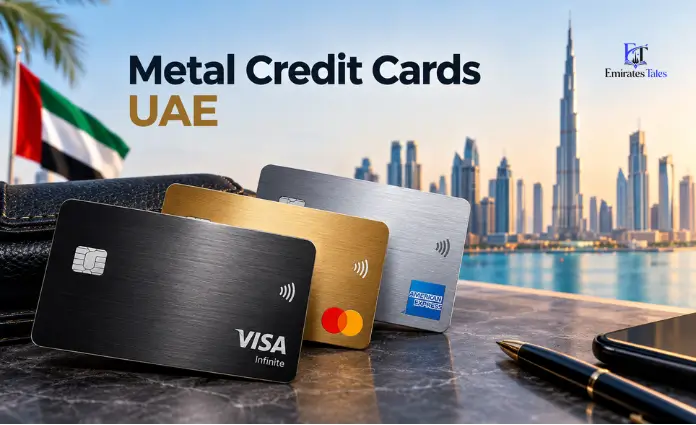

Remember when pulling out a credit card was just a boring part of paying the bill? These days, especially if you find yourself sitting in a high-end lounge in Dubai or wrapping up a business dinner in Abu Dhabi, it feels like a subtle performance. There is that distinct, satisfying clink when a heavy stainless steel or titanium card hits the restaurant table. It immediately signals that you aren’t just paying for dinner—you’ve arrived.
Yet, underneath the brushed metal finish and luxury branding sits a very practical question: Are metal credit cards in the UAE actually worth coughing up AED 2,000 to AED 3,000+ a year, or are you just paying for a fancy piece of heavy metal?
If you are an expat professional, a frequent flyer, or someone trying to make sense of the ultra-competitive UAE banking market, let’s strip away the marketing gloss. We are going to look past the shiny exteriors, break down the actual numbers, and figure out if a metal card deserves a spot in your wallet.
What Makes a Metal Card Different? (Beyond the Weight)
To understand why people are obsessed with these cards, it helps to look at how they are built and why they hit differently than old-school plastic.
The Build: Heavy, Sturdy, and a Bit Stubborn
Standard plastic PVC cards weigh around 5 grams. Metal cards—usually forged from stainless steel, brass, or sometimes titanium—bump that weight up to a hefty 12 to 18 grams. They feel solid, they don’t bend when you sit on your wallet, and the laser-etched numbers don’t rub off.
The best part? Banks didn’t sacrifice modern tech for aesthetics. They still feature embedded microchips and internal antennas, meaning your Apple Pay, Google Pay, and tap-to-pay habits won’t miss a beat.
The only minor annoyance? When your card eventually expires, you can’t just hack it to pieces with kitchen scissors. You actually have to mail it back to the bank so they can shred it safely.
The Psychology of the “Flex”
Let’s be honest—banks know exactly what they are doing. By locking their highest-tier rewards behind a sleek metal finish, they tap right into our desire for exclusivity. Dropping a steel card at a beach club on the Palm Jumeirah feels good. It’s a tangible marker of career milestones and financial success in a city that loves luxury.
The Heavy Hitters: Top Metal Cards in the UAE
Not all metal cards are created equal. The UAE banking scene is ruthless, and issuers pack these cards with serious perks to justify their high maintenance costs. Here are the front-runners:
- FAB Infinite / Elite Cards: Built for ultra-high earners and globetrotters. If you want top-tier concierge services, complimentary luxury airport transfers, and robust travel insurance that actually covers real-world mishaps, FAB is a strong contender.
- Emirates NBD Skywards Infinite Metal: The holy grail for anyone loyal to Dubai’s flagship airline. It fast-tracks you into Emirates Skywards Silver or Gold tiers, gives you unlimited LoungeKey access, and throws in free rounds of golf at local championship courses while racking up miles fast.
- Mashreq Solitaire: Ideal for foodies and mall-hoppers. It hooks you up with free monthly valet parking at major Dubai and Abu Dhabi malls, great cinema perks, and solid rewards on international spend.
- ADCB Excellence / Privileged Metal: A great middle-ground choice for established residents who want a mix of everyday utility, dining discounts via Marriott Bonvoy partnerships, and reliable purchase protection.
Do the Perks Actually Justify the Price?
A shiny card won’t pay your bills. If you’re going to shell out thousands in annual fees, the perks need to genuinely save you money or radically improve your lifestyle.
Travel That Actually Feels Like Luxury
If you live in the UAE, you probably fly more than the average person—whether heading home to visit family or escaping the summer heat. A good metal card should practically pay for itself through travel perks:
- Airport Lounges: Unlimited, free access for you (and often a guest) via Priority Pass or LoungeKey. No more sitting on uncomfortable terminal floors waiting for a delayed flight.
- Airport Meet & Greet: Fast-tracking your way through immigration queues at DXB or AUH.
- Travel Medical Insurance: Saving you hundreds of dollars a year on individual policy buy-outs every time you board a plane.
The Weekend Lifestyle in the Emirates
UAE weekends are all about dining out and leisure. These cards lean heavily into that culture:
- Fine Dining: “Buy One, Get One Free” offers on main courses at high-end spots across the Emirates.
- Valet Perks: Saving you time (and parking fees) at crowded spots like Dubai Mall or Galleria Mall.
The Reality Check: What Banks Don’t Shout About
Before you rush to apply, you need to look at the fine print. Metal cards come with hidden friction points that can catch you off guard.
- The Annual Fee Sting: We are talking anywhere from AED 1,500 to over AED 3,000 every single year. If you aren’t actively using the perks, it’s literally dead money.
- Strict Salary Gates: You can’t just waltz into a bank and request one. Most require a minimum monthly salary between AED 25,000 and AED 50,000—or massive savings (Assets Under Management) sitting in your account.
- The Foreign Currency Trap: Traveling back home or shopping online globally? Watch out for foreign exchange markups. Most UAE cards tack on a 2.95% to 3.25% fee on non-AED transactions, which can quietly eat up all the reward points you just earned.
- The Spend Trap: Reward multipliers often come with monthly caps or minimum spend rules. If your natural lifestyle doesn’t hit those numbers, you’ll end up spending money just to earn points—which defeats the entire purpose.
Who is the Ideal Owner for a Metal Card?
Metal cards aren’t for everyone. They are precision tools meant for specific types of spenders:
- Who should get one: Frequent flyers who maximize lounge access, high-earners whose everyday business or personal spending naturally clears reward thresholds, and social residents who will genuinely use valet, dining, and golf privileges.
- Who should skip it: Casual spenders, budget-conscious expats, or anyone who carries a balance month-to-month. If you’re paying credit card interest, any luxury reward program or cool metal aesthetic is completely wiped out by debt charges.
The Bottom Line
Metal credit cards in the UAE are fantastic financial tools if your lifestyle naturally matches what they offer. They turn routine spending into airport upgrades, smooth travel days, and weekend perks. But if you’re getting one purely for the initial “flex” when paying the bill, it’s an expensive ego trip.
Take a hard look at your actual travel habits, your dining out frequency, and your monthly budget. If the math works out, grab the steel card and enjoy the perks. If it doesn’t, a standard high-reward plastic card will keep your bank account much happier.
Frequently Asked Questions
1. Are metal credit cards noticeably heavier than regular plastic?
Yes, significantly. While standard plastic cards weigh around 5 grams, metal cards usually weigh between 12 and 18 grams because of their steel or titanium core.
2. Can I still use Apple Pay and tap-to-pay with a metal card?
Absolutely. Even though they are made of metal, manufacturers embed internal microchips and antennas so you can tap terminals or use Apple Pay and Google Pay without issues.
3. How much salary do I need to qualify for a metal card in the UAE?
Most premium metal cards require a minimum monthly salary ranging from AED 25,000 to AED 50,000, though some banks will waive this if you hold significant savings with them.
4. What happens when my metal card expires? Can I cut it up at home?
Don’t bother trying—household scissors won’t cut through stainless steel. You have to mail your expired or cancelled card back to the bank so they can destroy it securely.
5. Do banks ever waive the annual fee on metal cards?
Rarely. Unlike entry-level plastic cards that often come “free for life,” true luxury metal cards almost always charge their annual fee unless you maintain an exceptionally high balance with the bank.
6. Will a metal credit card set off airport security alarms?
No. Security metal detectors are calibrated to look for weapons and larger metallic items; having a single credit card in your wallet won’t cause any problems.
7. Do metal cards give better reward points than plastic cards?
Usually, yes. Because they sit at the top of a bank’s card hierarchy, they offer higher point multipliers, faster airline miles accumulation, and better cashback percentages.
8. Do metal credit cards scratch easily?
High-end cards use specialized coatings to minimize wear and tear, but minor surface scratches can happen over time if you slide them in and out of wallets and terminals constantly.
9. Is airport lounge access truly unlimited?
Many metal cards offer unlimited access for the cardholder via networks like LoungeKey or Priority Pass, and some even include a handful of free guest passes each year.
10. Is an AED 3,000 annual fee actually worth paying?
Only if you travel frequently, use the included travel insurance, utilize airport meet-and-greet services, and maximize dining discounts. If you’re a homebody who rarely travels, the fee is a waste of money.