





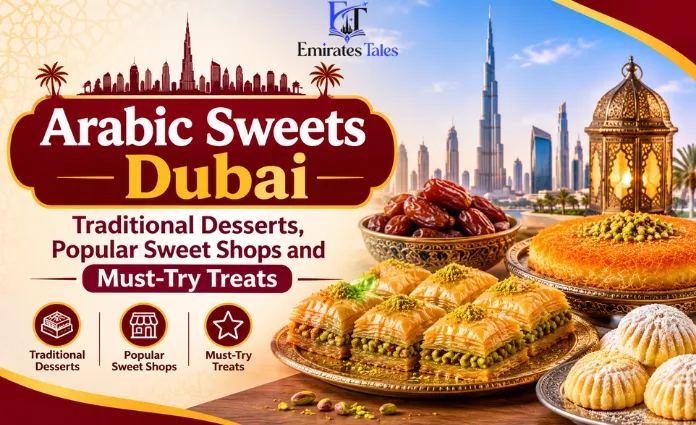

Dubai is a wonderful place to explore traditional Arabic sweets, with dessert shops, bakeries and restaurants offering flavours from across the Middle East. From freshly prepared kunafa and pistachio-filled baklava to Emirati luqaimat covered in date syrup, the city has something for people who enjoy traditional desserts.
Arabic sweets are more than just desserts. They are an important part of Middle Eastern hospitality, family gatherings, weddings and religious celebrations. Many recipes have been passed down through generations, using ingredients such as dates, pistachios, almonds, semolina, honey, rose water and cardamom.
Whether you are visiting Dubai for the first time or looking for a new dessert shop to explore, this guide introduces some of the most popular Arabic sweets in Dubai, explains their ingredients and origins, and highlights places where you can find traditional Middle Eastern treats.
What Makes Arabic Sweets Special?
Arabic sweets are known for their combination of rich ingredients, distinctive flavours and traditional preparation methods. Unlike many Western desserts that rely heavily on chocolate, cream or fruit, traditional Middle Eastern confectionery often uses nuts, dates, aromatic spices and sugar syrup.
Traditional Ingredients Used in Arabic Desserts
Several ingredients give Arabic sweets their recognisable taste and texture.
- Pistachios: Commonly used as fillings, toppings and garnishes for baklava, kunafa and other pastries.
- Dates: A traditional ingredient used in maamoul, date-filled cookies and Emirati desserts.
- Semolina: Provides texture in desserts such as basbousa and certain varieties of kunafa.
- Rose water: Adds a light floral fragrance to puddings, syrups and pastries.
- Orange blossom water: Gives many Levantine desserts their characteristic aroma.
- Cardamom and saffron: Frequently used in traditional Gulf desserts.
- Ghee and butter: Add richness to pastries, cakes and fried sweets.
- Honey and sugar syrup: Provide sweetness and help create the glossy finish found on many Arabic pastries.
The combination of these ingredients creates desserts that range from light milk puddings to rich, layered pastries.
The Cultural Importance of Arabic Sweets
Sweets have an important place in Middle Eastern hospitality. Offering guests something sweet alongside Arabic coffee or tea is a familiar tradition in many households.
They are also commonly prepared or purchased for:
- Ramadan and Iftar gatherings.
- Eid celebrations.
- Weddings and family occasions.
- Engagements and special celebrations.
- Visiting relatives and welcoming guests.
- Corporate events and gift exchanges.
In Dubai, traditional sweet boxes are also popular gifts because they allow people to share different varieties of regional desserts.
Most Popular Arabic Sweets to Try in Dubai
Dubai offers a wide selection of Arabic desserts, including traditional Emirati recipes and popular sweets from Lebanon, Syria, Palestine and other parts of the Middle East.
Here are six desserts worth trying.
Kunafa (Knafeh)
Kunafa is one of the most recognisable Arabic desserts and a favourite among people visiting Middle Eastern sweet shops.
It is generally prepared using shredded pastry or fine semolina-based dough, layered around a filling of cheese or cream. The dessert is baked or cooked until the outside becomes golden and crisp, then finished with sugar syrup and often topped with crushed pistachios.
There are several varieties of kunafa.
- Nabulsi Kunafa: Traditionally associated with Nablus, Palestine, and commonly prepared with cheese.
- Cream Kunafa: Filled with smooth cream instead of cheese.
- Khishneh Kunafa: Made with coarser strands of shredded pastry.
- Na’ameh Kunafa: Uses a finer semolina-based texture.
Kunafa is particularly enjoyable when served warm, allowing the filling and pastry to provide contrasting textures.
Baklava
Baklava is another popular dessert available in Arabic sweet shops throughout Dubai.
It consists of thin layers of filo pastry filled with chopped nuts and finished with sweet syrup. Pistachios, walnuts and cashews are common choices, although ingredients vary between recipes.
Popular varieties include:
- Pistachio baklava.
- Walnut baklava.
- Cashew-filled baklava.
- Finger-shaped baklava.
- Diamond-shaped baklava.
- Baklava rolls.
The thin pastry layers create a crisp texture, while the nut filling adds richness. Baklava is also frequently purchased in decorative boxes for gifting.
Luqaimat
Luqaimat is a traditional Emirati dessert made from small balls of fried dough.
The outside becomes golden and slightly crispy, while the inside remains soft and fluffy. The dough is commonly flavoured with cardamom and saffron, giving the dessert a distinctive Gulf flavour.
After frying, luqaimat are usually served with date syrup, also known as dibs, and sometimes sprinkled with sesame seeds.
They are especially popular during Ramadan and other family gatherings.
Unlike some layered Arabic pastries, luqaimat are generally best enjoyed shortly after preparation, when their outside texture is still crisp.
Maamoul
Maamoul is a traditional Middle Eastern filled cookie commonly prepared for Eid and other celebrations.
The dough is typically made with flour or semolina, butter or ghee, and other ingredients depending on the family recipe.
Common fillings include:
- Date paste.
- Crushed pistachios.
- Walnuts.
Maamoul is traditionally shaped using decorative wooden moulds that create attractive patterns on the outside.
The cookies are often lightly dusted with powdered sugar and arranged in boxes for guests or family members.
Basbousa
Basbousa is a soft semolina cake found in many Middle Eastern bakeries and restaurants.
Its main ingredient is semolina, which gives the cake a slightly grainy texture. After baking, it is soaked in sugar syrup to create a moist and sweet finish.
Almonds are commonly placed on top before baking, while some recipes include coconut, yoghurt or orange blossom water.
Basbousa is usually cut into small squares or diamond-shaped portions and served with Arabic coffee or tea.
It is a good option for people who prefer cake-style Arabic desserts rather than fried pastries or nut-filled sweets.
Umm Ali
Umm Ali is a traditional Egyptian dessert that has also become popular in restaurants and hotels throughout Dubai.
It is similar to a warm bread pudding, prepared using pastry or puff pastry layered with milk, cream, nuts and dried fruits.
Common ingredients include:
- Puff pastry or croissants.
- Milk and cream.
- Pistachios.
- Almonds.
- Raisins or sultanas.
- Coconut flakes.
- Sugar.
The mixture is baked until the top becomes lightly golden and the inside develops a soft, creamy consistency.
Umm Ali is often served warm and is particularly popular as a dessert after a family meal.
Other Traditional Arabic Sweets Worth Discovering
Beyond the well-known desserts, Dubai’s sweet shops offer several regional specialities that are worth exploring.
Muhalabiya
Muhalabiya is a milk-based pudding with a smooth and delicate texture. It is commonly flavoured with rose water or orange blossom water and topped with pistachios.
Its lighter consistency makes it a different experience from rich pastries such as baklava.
Halawet El Jibn
Halawet el jibn is a popular Levantine dessert made using a soft mixture of cheese and semolina.
The dough is rolled around a filling of cream, usually ashta, and finished with sugar syrup and crushed pistachios. Some versions also include rose petal jam.
It is particularly popular in Lebanese and Syrian sweet shops.
Khabeesa
Khabeesa is a traditional Emirati sweet made using roasted flour or semolina, ghee, sugar and aromatic ingredients.
Depending on the recipe, it may include saffron, cardamom, dates or rose water.
It is commonly served warm and is associated with traditional Emirati hospitality.
Khanfaroosh
Khanfaroosh is a traditional Gulf sweet prepared using ingredients such as flour, eggs, sugar and rice flour, with variations in the recipe.
Saffron, cardamom and rose water are often added for flavour. The mixture is fried into small cakes or portions and served during family gatherings.
Omani Halwa
Omani halwa is a rich, sticky confectionery popular across the Gulf region.
It is traditionally made using sugar, starch, ghee, nuts and aromatic ingredients such as saffron, cardamom and rose water.
It is often served in small portions alongside Arabic coffee.
Best Places to Buy Arabic Sweets in Dubai
Dubai has several established sweet shops where visitors can explore traditional Arabic confectionery. Some specialise in Lebanese and Syrian pastries, while others offer Emirati desserts and regional Gulf specialities.
Here are some recognised places worth considering.
Al Samadi Sweets – Deira
Al Samadi Sweets is a long-established name in Dubai’s Arabic confectionery scene. Its roots trace back to Beirut, Lebanon, and the Deira shop has been serving traditional sweets to Dubai residents for decades.
The shop is known for its Lebanese-style confectionery and a selection that includes maamoul, baklava, bukaj and halawet el jibn.
It is worth visiting if you want to explore traditional pastries and purchase assorted sweet boxes for family gatherings or gifts.
Location: 48 Al Muraqqabat Street, Deira.
Firas Sweets – Al Hudaiba
Firas Sweets is particularly well known for kunafa and other traditional Middle Eastern desserts.
Its selection includes cheese and cream-based kunafa, alongside assorted Arabic pastries. The kunafa is especially popular with people who enjoy warm desserts with a crisp pastry layer and soft filling.
The Al Hudaiba branch is a useful option for people exploring traditional Arabic sweets in this part of Dubai.
Location: Al Hudaiba Building, 2nd of December Street, Al Hudaiba.
Nabeel Nafisah Sweets – Al Barsha
Nabeel Nafisah Sweets offers a selection of Syrian and Damascene-style Arabic desserts.
Its range includes kunafa, baklava, pistachio pastries, cream-filled sweets and other traditional confectionery.
It is worth considering if you want to explore different Syrian dessert varieties or purchase a mixed selection to share.
Location: Al Barsha 1, Dubai.
Al Hallab Restaurant & Sweets – Garhoud
Al Hallab is a Lebanese restaurant and sweets destination with roots in Tripoli, Lebanon.
Alongside its restaurant menu, it offers a variety of traditional Lebanese desserts, including baklava, maamoul, cream-based pastries and kunafa.
Its Garhoud location is suitable for people who want to enjoy a full Lebanese meal followed by traditional sweets.
Location: Sheikh Rashid Road, Al Garhoud, Dubai.
Luqaimat and Chebab – Al Warqa
For people interested in traditional Emirati flavours, Luqaimat and Chebab in Al Warqa is another option.
The menu focuses on local favourites such as luqaimat and chebab, an Emirati-style pancake commonly flavoured with saffron and cardamom.
It offers a different experience from the Lebanese and Syrian sweet shops, making it relevant for anyone wanting to explore local Emirati food traditions.
Location: Near Abdul Rahim Hussain Gargash Mosque, Al Warqa 1.
Emirati Sweets vs Lebanese and Syrian Sweets
Although people often use the term Arabic sweets to describe Middle Eastern desserts collectively, different countries and communities have their own ingredients, preparation methods and traditional recipes.
Understanding these differences can help visitors choose desserts that match their preferences.
| Feature | Emirati Sweets | Lebanese and Syrian Sweets |
| Popular examples | Luqaimat, khabeesa, khanfaroosh | Kunafa, baklava, maamoul |
| Common ingredients | Dates, flour, saffron, ghee | Filo pastry, pistachios, cheese, semolina |
| Common flavours | Cardamom, saffron, date syrup | Rose water, orange blossom water |
| Typical textures | Soft, fried or cake-like | Crispy, layered, creamy or filled |
| Serving occasions | Hospitality, Ramadan and gatherings | Celebrations, gifting and family meals |
Emirati desserts often highlight ingredients associated with Gulf food traditions, particularly dates, saffron and cardamom.
Lebanese and Syrian confectionery, on the other hand, is widely known for layered pastries, nut fillings, cheese-based desserts and cream-filled sweets.
These are broad regional characteristics, and recipes can differ considerably between families and sweet shops.
Arabic Sweets for Ramadan, Eid and Special Occasions
Traditional sweets become particularly important during Ramadan, Eid and other celebrations in Dubai.
Arabic Sweets During Ramadan
After Iftar, families often enjoy a selection of traditional desserts alongside tea or Arabic coffee.
Popular choices include:
- Luqaimat with date syrup.
- Kunafa with cheese or cream.
- Qatayef filled with cream or nuts.
- Umm Ali.
- Baklava and assorted pastries.
Many sweet shops prepare larger selections during Ramadan to meet demand from families and customers hosting Iftar gatherings.
Eid Sweet Boxes
Maamoul, baklava and assorted Arabic pastries are common choices for Eid gifts.
Sweet boxes allow people to combine different flavours and fillings in one package. Pistachio, walnut and date varieties are especially useful when buying for family members or guests with different preferences.
Wedding and Corporate Gifts
Arabic sweets are also popular at weddings, engagements and business events.
Customers can choose from:
- Assorted baklava boxes.
- Individually packaged maamoul.
- Pistachio-filled pastries.
- Decorative confectionery trays.
- Customised sweet gift boxes.
Many Dubai sweet shops also offer catering or bulk-order arrangements. It is best to confirm packaging, quantities and delivery requirements in advance.
How to Choose the Best Arabic Sweets in Dubai
With so many dessert varieties available, choosing the right Arabic sweets depends on your taste preferences, the occasion and how you plan to serve them.
Check Freshness and Ingredients
Freshness is particularly important for desserts such as kunafa and fried pastries.
Before purchasing, consider:
- Whether the pastry looks fresh and properly stored.
- Whether the filling has the expected texture.
- Whether the shop provides ingredient information.
- Whether the dessert is prepared fresh or sold from a packaged display.
- Whether the packaging is suitable for takeaway or delivery.
Choose According to Your Taste
Different desserts offer different flavours and textures.
| If You Prefer | Try |
| Crispy pastry and cheese | Kunafa |
| Nuts and layered pastry | Baklava |
| Date-based flavours | Maamoul |
| Soft fried dough | Luqaimat |
| Moist semolina cake | Basbousa |
| Warm and creamy desserts | Umm Ali |
| Milk-based pudding | Muhalabiya |
Buying Arabic Sweets as Gifts
If you are purchasing sweets for someone else, assorted boxes are a practical choice.
Look for a selection that includes different fillings, textures and flavours. Also check the storage instructions and recommended consumption period, especially if you are travelling with the sweets.
For people with food allergies, it is important to ask about nuts, dairy, gluten and other ingredients before purchasing.
Conclusion
Arabic sweets are an important part of Dubai’s food culture, bringing together traditional Emirati desserts and confectionery from across the Middle East. From warm kunafa and crispy baklava to luqaimat, maamoul and creamy Umm Ali, there are plenty of varieties to explore.
Whether you want to try traditional Gulf desserts, purchase a gift box or visit an established Arabic sweet shop, Dubai offers many opportunities to discover these regional flavours.
FAQ’s
1. What are the most popular Arabic sweets in Dubai?
Some popular choices include kunafa, baklava, luqaimat, maamoul, basbousa and Umm Ali. Dubai’s sweet shops also offer regional specialities such as halawet el jibn, khabeesa and Omani halwa.
2. Where can I buy traditional Arabic sweets in Dubai?
You can find traditional Arabic sweets at Al Samadi Sweets in Deira, Firas Sweets in Al Hudaiba, Nabeel Nafisah in Al Barsha and Al Hallab in Garhoud. These shops offer different varieties of Middle Eastern confectionery.
3. What is the most famous Emirati sweet?
Luqaimat is among the best-known traditional Emirati sweets. These small fried dough balls have a crispy exterior and soft interior and are commonly served with date syrup and sesame seeds.
4. What is the difference between kunafa and baklava?
Kunafa is usually made with shredded pastry or semolina dough and filled with cheese or cream. Baklava consists of thin filo pastry layers filled with chopped nuts and finished with sweet syrup.
5. Where can I find fresh kunafa in Dubai?
Firas Sweets, Al Samadi Sweets and Nabeel Nafisah are among the places offering kunafa in Dubai. For the best texture, ask whether it can be served freshly prepared and warm.
6. Which Arabic sweets are traditionally served during Eid?
Maamoul, baklava, date-filled cookies and assorted nut pastries are popular Eid sweets. Families often prepare or purchase mixed sweet boxes to share with guests and relatives.
7. Are Arabic sweets available in gift boxes in Dubai?
Yes. Many Arabic confectionery shops offer assorted gift boxes containing baklava, maamoul, pistachio pastries and other traditional sweets. Packaging options and custom orders depend on the individual shop.
8. What ingredients are commonly used in Arabic desserts?
Common ingredients include pistachios, almonds, walnuts, dates, semolina, filo pastry, ghee, butter, sugar syrup, rose water, orange blossom water, saffron and cardamom.
9. What is the difference between Emirati and Lebanese sweets?
Emirati sweets commonly feature dates, saffron, cardamom and ghee, with examples such as luqaimat and khabeesa. Lebanese sweets are widely known for baklava, kunafa, maamoul and cream-filled pastries.
10. Can I find sugar-free or reduced-sugar Arabic desserts in Dubai?
Some shops may offer reduced-sugar or alternative dessert options, but availability varies. Ask about the recipe and ingredients directly, as traditional desserts often contain sugar syrup, honey or other sweeteners.