





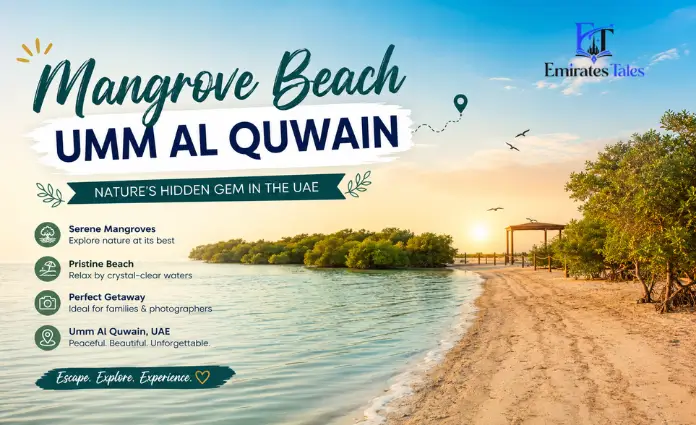

Mangrove Beach Umm Al Quwain is a breath of fresh air in the UAE’s more advanced waterfront destinations. Rather than tall buildings, bustling promenades and upscale shopping districts, visitors find shallow coastal waters, sandy areas, green mangrove plants and a nature-inspired environment.
The beach is particularly attractive to travellers searching for a peaceful weekend escape. Families can have an outdoor picnic, photographers can take photos of the changing coastal landscape, and adventure seekers can explore parts of the mangrove environment by kayak. It’s also laid-back enough for those who just want to sit by the water and experience a more relaxed side of the Emirates.
The beach is situated in the northern emirate of Umm Al Quwain, where nature-based tourism is becoming a key priority. The expansion of mangroves is also part of Umm Al Quwain’s broader Sustainable Blue Economy Strategy, highlighting the environmental significance of these coastal forests for the emirate’s future.
Mangrove Beach Umm Al Quwain Is What?
Mangrove Beach Umm Al Quwain is a coastal recreation area associated with the mangrove landscape around Khor Al Yeefrah. It was opened to the public in 2020 and was an early eco-tourism project in the emirate. The goal of the destination was to make the coastal environment more accessible and raise awareness of the value of mangrove ecosystems.
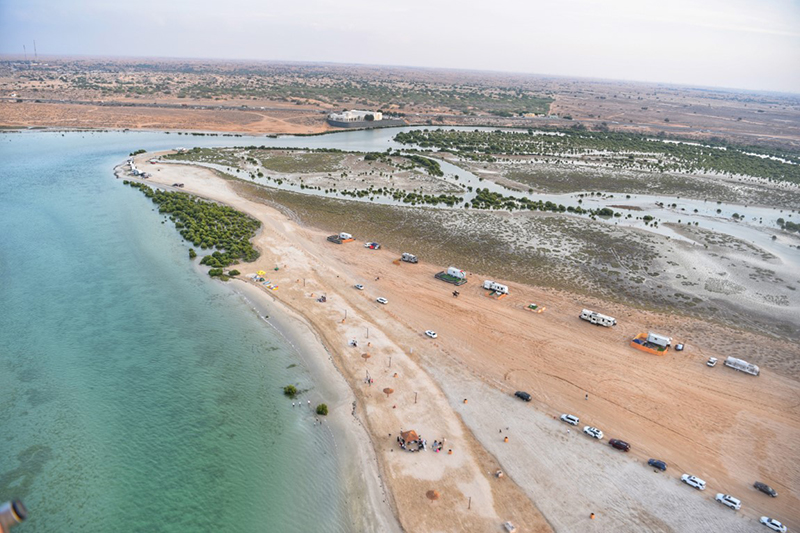
The mangrove beach is a strange juxtaposition of two environments. The visitor can enjoy an open sandy beach and view the mangrove plants in tidal water. These trees and shrubs are salt-tolerant and can withstand conditions that are harsh for most terrestrial plants.
The scenery changes with the tide. Mangrove areas can look like green islands in calm water at higher water levels. Exposed mudflats and shallow channels are more visible during low tide. This evolving scene creates a different look during the day.

Why Mangrove Beach Is Different From Other UAE Beaches
Many beaches in UAE are famous for their smooth walkways, hotels, beach clubs and organised entertainment. Umm Al Quwain Mangrove Beach is a more natural experience.
It’s simple, not luxurious. People visit for open views, coastal vegetation, wildlife viewing and relaxation by the water. The place is thus better for nature enthusiasts than for those who are looking for a fully equipped resort beach.
It is unique in several ways:
- Mangrove vegetation is found near the coast
- The sea is clearly tidal
- Kayaking provides access to shallow waterways and natural channels
- A visit to the beach is enhanced by birdwatching
- The environment is quieter than the waterfronts of larger cities in the UAE
- The area is conducive to environmental education and eco-tourism
This mix makes Mangrove Beach one of the most interesting natural sites to visit in Umm Al Quwain.
Mangrove Beach Location and How to Reach It
Mangrove Beach is located around Khor Al Yeefrah in Umm Al Quwain. It is usually accessible from the E11 corridor, and is most easily accessed by private car or taxi.
Travelers should use the full name of the destination in their navigation system, not just the road signs. It is wise to check the route just before leaving as access, entrances and nearby development may change.
The easiest way to travel is by car, as visitors tend to bring picnic supplies, additional clothing, water or kayaking gear. The area of the beach may not be directly accessible by public transport.
If you are coming from another emirate, please plan for extra time on the weekend. There are also benefits to leaving early: cooler weather, less light for photography, and a greater opportunity to enjoy a quiet stretch of the beach.
Best Time to Visit Mangrove Beach Umm Al Quwain
Mangrove Beach is best visited during the cooler part of the year. Outdoor activities like walking, picnicking, kayaking and observing wildlife are more enjoyable for longer periods of time from late fall through early spring.
Visitors who prefer mild temperatures and a quiet environment will find early morning to be the best time to visit. Sunrise can create soft light over the water, especially if the tide creates wide reflective surfaces.
Another popular choice is late afternoon. The sun is less intense and the landscape may take on warmer hues as night falls. Those who intend to stay until dusk should bring a small light and arrange their gear before it gets dark.
Additional preparation is needed for summer visits. Long outdoor sessions can be uncomfortable due to high temperatures, humidity and strong sunlight. People visiting during the warmer months should plan to visit early in the day, bring ample drinking water and avoid unnecessary exposure to the midday sun.
The experience is also influenced by the tides. Kayaking tours may run on the tide, not on a set time each day, so water-based activities should be booked or confirmed ahead of time.
Best Things to Do at Mangrove Beach Umm Al Quwain
Explore the Coastal Landscape
Walking along the accessible sandy areas and watching the changes in the environment between dry land, shallow water and mangrove vegetation is one of the simplest activities.
The site is worth a leisurely stroll. Sometimes the little things, like bird tracks, shells, exposed roots, tidal patterns and reflections, are more memorable than organised entertainment.
Visitors are advised to stay on designated or easily accessible ground. Mudflats may be soft, slippery or ecologically sensitive, and walking directly into mangrove growth may damage young plants.
Experience Mangrove Kayaking
Kayaking is one of the most rewarding ways to experience the Umm Al Quwain mangroves. A kayak enables visitors to glide through the water quietly and see the vegetation from a different perspective.
There are guided mangrove experiences for beginners and group participants offered by local operators. One of the operators currently describes a two-hour session, which includes instruction, a guide, a kayak and a life jacket. Its departures are tide-dependent and normally take place around two hours before high tide.
A guided experience is particularly helpful for novice paddlers. Teachers can provide information on basic steering, safe distances, appropriate routes and the need to avoid sensitive wildlife areas.
Watch Birds and Coastal Wildlife
A variety of plants, aquatic animals and birds are found in mangrove habitats. The sheltered water and tidal mud make the beach attractive to patient wildlife observers, as they provide feeding and resting places.
Bird activity varies with the season, tide and time of day. Wading birds may be seen probing in shallow water or larger birds walking from one coastal feeding area to another.
Wildlife viewing is not guaranteed. The safest way to do this is to stay quiet, stay back and let the animals act as they please. Binoculars are better than getting close to birds.
Plan a Family Picnic
The peaceful surroundings make Mangrove Beach suitable for a simple family picnic. Bring portable seating, reusable containers, snacks and sufficient water for the entire group.
Select a firm sand flat that is not near the tide. Before settling, check if the water is rising and do not put bags or blankets too near wet ground.
Families should pack light items as wind can easily blow tissues, bags and food wrappers towards the sea. An extra rubbish bag will make cleaning up the area easier.
Enjoy Nature Photography
Mangrove Beach is an excellent location for landscape, wildlife and travel photography. The most striking visual element is the juxtaposition of green vegetation, light sand, open sky and shallow blue water.
Useful subjects include:
- At high tide, mangrove reflections
- Patterns on exposed tidal ground
- Birds feeding in shallow channels
- Kayaks traveling from green vegetation to green vegetation
- Sunrise and sunset shots with a wide angle.Sunrise and sunset shots in wide angle
- Small details such as leaves, roots and shells
A telephoto lens is useful for photographing birds without disturbing them, and a wide-angle lens is useful for showing the scale of the coastal environment. To enhance the quality of their photos, phone photographers can clean the camera lens and refrain from using too much digital zoom.
Consider Responsible Camping
Camping and designated barbecue areas are part of the Mangrove Beach experience, as described by some visitor guides. Access rules and permitted zones may change, however, so visitors should check local conditions before pitching a tent, caravan or cooking equipment.
Camping near a natural area is more demanding than camping at a commercial campsite. Noise should be kept to a minimum, fires should never be set near vegetation and all items brought to the beach should be taken away.
Kayaking Through the Umm Al Quwain Mangroves
Mangrove kayaking is a gentle activity that allows for a close-up view of the coastal ecosystem. Kayaks are low on the water and paddlers can observe tidal channels, exposed roots and birdlife without the noise of motorised boats.
It is advisable for beginners to choose a guided tour instead of entering into unfamiliar waterways. Tides can change water depth and route accessibility. A channel that is shallow enough to cross at one time can become too shallow at another.
Visitors should inquire about:
- The expected duration
- Minimum age requirements
- Swimming ability recommendations
- The weather and tide conditions
- Included safety equipment
- Changing and shower facilities
- Cancellation rules
- Suitable clothing
Operators are advised to bring sun protection, waterproof clothing, a towel, water and a change of clothes. Guided sessions with life jackets and basic instruction are provided by the operator.
Paddlers should not touch or pull branches of mangroves. They should also not follow birds or other animals for photos. The aim of a mangrove tour is to pass through the habitat with as little disturbance as possible.
Wildlife and Environmental Importance
Mangroves are more than a pretty backdrop. They have dense root systems that can help to anchor the coastal ground and lessen the effect of waves. Mangrove habitats also provide shelter and feeding areas for marine organisms, plants and birds.
The plants are specially adapted to saline coastal environments. They are associated with tides, sediments and shallow water, which forms complex habitats that support biodiversity.
This ecological function alters the nature of the visit for visitors. Mangrove Beach is not just a recreational area, it is a living coastal system. Root damage, waste or intrusion into restricted areas can have impacts beyond the shoreline.
The expansion of mangrove cover in Umm Al Quwain is another example of the link between coastal conservation, climate targets and responsible tourism.
The Facilities, Entrance Information and Visitor Expectations
Mangrove Beach is not a complete urban beach, but rather a place for nature lovers. Nearby food, shaded areas, swings, picnic areas, camping or barbecue areas are mentioned in published guides. Facilities can be developed or modified, so please check availability before assuming a service is available.
A vehicle entrance fee has been previously reported by third party visitor guides. Admission may be subject to change, so travellers should have a payment method and check the current admission price at the entrance or via an updated local listing.
Lifeguards, changing rooms, showers and equipment rentals are not guaranteed in all sections. Guided kayaking facilities may provide separate services, but these are not to be confused with general public-beach facilities.
Is Mangrove Beach Suitable for Families?
With planning around weather, tides and limited facilities, Mangrove Beach can be a fun family destination.
Children can have fun on the sand, watch the birds, gather photos and learn about how mangroves live in salt water. Parents can make the visit a straightforward lesson about the environment by explaining why plants and animals should not be touched or removed.
Supervision is critical in the water. Shallow coastal water can give a false sense of security, soft mud, sharp shells and changing tides can add unexpected hazards.
Families with infants and toddlers should bring their own shade, food, drinking water and hygiene supplies. A small first aid kit is also useful.
What to Bring to Mangrove Beach
A practical packing list should contain:
- Refillable drinking-water bottles
- Sunscreen and lip protection
- A hat and sunglasses
- Lightweight, simple outdoor wear
- Waterproof shoes or sandals
- A picnic mat or folding chairs
- Reusable food containers
- Rubbish and recycling bags
- Insect repellent
- Extra towels and clothing
- A portable phone charger
- A basic first aid kit
- Binoculars or camera
- A small torch for night visits
Avoid bringing disposable decorations, balloons or lightweight plastic items that can escape in the wind.
Responsible Tourism at Mangrove Beach
Responsible behaviour enables people to enjoy the destination without compromising its natural value.
There are a number of basic rules that visitors should adhere to:
- Carry out all waste.
- Stay away from fenced or restricted areas
- Never cut, pull or climb mangrove plants
- Avoid feeding birds and marine animals
- Play music at a proper volume
- Only use approved barbecue areas
- Never pour oils, soap or chemicals on the sand
- Control pets when allowed
- Keep lights away from wildlife at night
- Do not remove shells, plants and natural materials
Travellers should also not post the exact location of nesting or resting wildlife. A general beach location is not the same as directing people to a sensitive animal site.
Suggested One-Day Itinerary
Early Morning
Arrive shortly after sunrise to enjoy cooler conditions and softer light. Walk for the first hour along the accessible beach and watch the tide.
Mid-Morning
If the tide schedule allows, join a pre-booked kayaking tour. Use a waterproof case for your phone or camera and follow the guide’s directions.
Lunchtime
Choose a clean, stable area for a picnic. Avoid using disposable containers and cover all food to prevent attracting animals.
Afternoon
Relax in the shade, watch birds through binoculars or photograph the patterns created by the changing tide.
Sunset
Go to a safe open area for sunset. Pack up most of the gear before the light goes out and check the area thoroughly for litter before you leave.
Important Safety Tips
Please consult the weather forecast and tides before leaving. Kayaking and other outdoor activities may be impacted by strong wind, high heat or low visibility.
Never swim in deep or unfamiliar water without experience or safety gear. No one should rely on the presence of a lifeguard.
Wear protective footwear while walking near wet sand or tidal ground. Shells, stones and hidden debris may cause injuries.
Keep valuables in a safe place and never leave phones, wallets or car keys out. Use a waterproof pouch with a secure attachment when kayaking.
Lastly, obey signs and staff or local instructions. Temporary restrictions can be used to protect visitors, wildlife or newly planted mangroves.
Why Visit Mangrove Beach Umm Al Quwain?
Mangrove Beach is a must-visit destination on a UAE itinerary, as it showcases a landscape that many travellers do not associate with the UAE.
The destination offers:
- A peaceful alternative to the crowded city beaches
- Accessible nature-based recreation
- Scenic kayaking opportunities
- Birdwatching and photography
- A family-friendly outdoor environment
- This is an introduction to the coastal ecology of the UAE
- A peaceful setting for sunrise or sunset
- A significant example of eco-tourism in Umm Al Quwain
It doesn’t require a complex travel plan to enjoy it. A few hours beside the water can provide a memorable contrast to shopping centres, skyscrapers and heavily developed attractions.
Conclusion
Mangrove Beach Umm Al Quwain is a tranquil coastal paradise offering sandy beaches, tidal waters, mangrove flora and fauna in one place.
It’s not about the artificial rides or the big entertainment areas. They are the quiet movement of the tide, the sight of birds above shallow water, the reflections between mangrove plants and the opportunity to explore slowly by kayak.
Preparation is key to a successful visit. Access information should be checked, tides should be taken into account, water should be brought and the habitat treated responsibly. Those simple steps help to preserve the natural environment and make it more comfortable.
Mangrove Beach offers something that is becoming more and more important to residents and tourists alike: open space, ecological interest and time away from the noise of the city.
FAQ’s
1. What Is the Location of Mangrove Beach Umm Al Quwain?
It is located around Khor Al Yeefrah in the emirate of Umm Al Quwain.
2. Is Mangrove Beach Open to the Public?
It is open to the public, but access may be subject to change; please check before visiting.
3. Do They Charge an Entrance Fee?
Vehicle entry fees have been reported by third parties but the current fee should be verified locally.
4. Is It Possible to Kayak in the Mangroves?
Yes. Guided kayaking is available in the mangroves of Umm Al Quwain and is usually conducted according to the tide.
5. Is Mangrove Beach Safe for Kids?
Yes, with careful adult supervision and preparation for heat, water and limited facilities.
6. Is It Possible to Camp at Mangrove Beach?
The area has been used for camping, but please check the current rules and approved zones before.
7. What Is the Best Time to Visit?
The cooler months and early morning or late afternoon are usually the most comfortable times.
8. Is There a Beach for Visitors to Swim At?
Swimming conditions vary. Visitors should evaluate the water and never presume lifeguards are on duty.
9. Are Pets Allowed?
Beach rules and private facility rules may vary, please check the current rules before arriving.
10. What Do Visitors Need to Bring?
Take water, sun cream, shade, appropriate footwear, food, rubbish bags and change of clothes.
