





Sharjah has a reputation for museums, markets, heritage districts, mosques and archaeological discoveries. The emirate is not only known for its cultural attractions but also has burial grounds which preserve stories of its ancient inhabitants, communities and religions.
It may seem that the phrase “Sharjah graveyard” describes a specific place. It is actually used to describe several locations. It could be a modern Muslim graveyard in Sharjah’s Industrial Area, Al Jubail Cemetery or a Christian burial ground associated with St Martin’s Church. Or it could refer to ancient burial sites found at Mleiha and Jebel al-Buhais.
Families, researchers and visitors should all be aware of the differences between these places. A cemetery isn’t just another tourist attraction. A cemetery is a place for mourning, remembering, praying and reflecting. Visitors to graveyards in Sharjah are asked to behave calmly, wear modest clothing and follow the rules set by the site.
This guide describes the major cemeteries that are associated with the Sharjah graveyard keyword. It also explains their cultural significance, the archaeological burial sites of the emirate, and the respect expected from visitors.
What Does “Sharjah Graveyard” Refer To?
Sharjah Cemetery is not a single location that appears in every search online. The name of a cemetery is commonly used in public map listings for Sharjah Industry Area 6. Some listings refer to Al Jubail Cemetery, which is closer to the historical center of the town. The Commonwealth War Graves Commission calls the cemetery located behind St Martin’s Church, “Sharjah Cemetery.”
This can lead to confusion.
A family searching for a recently-buried relative might be looking at an active municipal graveyard. Researchers interested in British Military History may search for the cemetery located behind St Martin’s Church. Someone researching the ancient history in Sharjah might be looking for prehistoric graves outside of the modern city.
Visitors should check:
- The full name of the cemetery
- Its neighborhood or district
- It serves the religious community
- It is important to determine whether it is a historical or active burial ground.
- Current Access Arrangements
- Is permission required?
Visitors could be misled by the phrase “Sharjah graveyard”.
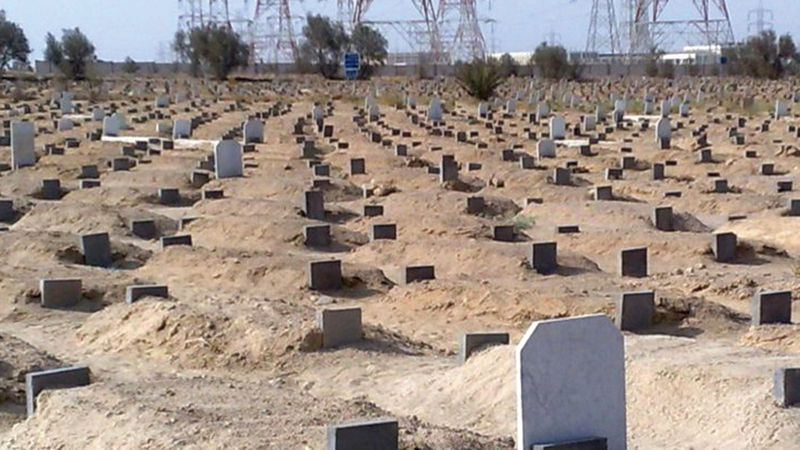
Sharjah Cemetery in Industrial Area 6
The most common cemetery labelled Sharjah graveyard by navigation services is located in or close to Industrial Area 6. The cemetery is located around Al Maghreb Al Arabi Street, and according to map records it serves the Sharjah Community.
When people use phrases like:
- Sharjah Muslim Cemetery
- The main graveyard in Sharjah
- Sharjah burial ground
- Industrial Area 6 cemetery
- Muslim graveyard near Sharjah city
Its primary purpose as an active cemetery is to provide a place for burial and the remembrance of family members, not to be toured. Priority and privacy must be given to funeral parties.
Map applications can display information such as opening hours, phone numbers, or access routes. However, this information may become outdated. Families should not rely solely on map listings, but rather check with the relevant authorities to confirm current instructions.
The appearance of the cemetery reflects the simplicity that is often associated with Muslim burial grounds. Visitors can expect simple graves, practical paths, boundary walls, and areas for funeral services. In general, elaborate decoration is less important than dignity and order.
Al Jubail Cemetery
Al Jubail Cemetery Another recognized graveyard in Sharjah is Al Jubail Cemetery . Geographical records locate it in Al Jubail, a relatively close area to Sharjah’s older residential and commercial districts.
The site reflects the relationship between the long-established community and the changing urban landscape. Around areas that used to be on the fringe of the settlement, modern roads, businesses and facilities for the public have been developed.
An older urban cemetery can provide historical evidence about how a city grew and how certain neighborhoods remained linked. However, for families, the importance of a cemetery is very personal. It’s a place to remember relatives, pray and maintain connections between generations.
Visitors should avoid using Al Jubail Cemetery as a mere map landmark. Respect for the private grieving of others and a quiet conduct are essential.
St Martin’s Church Cemetery
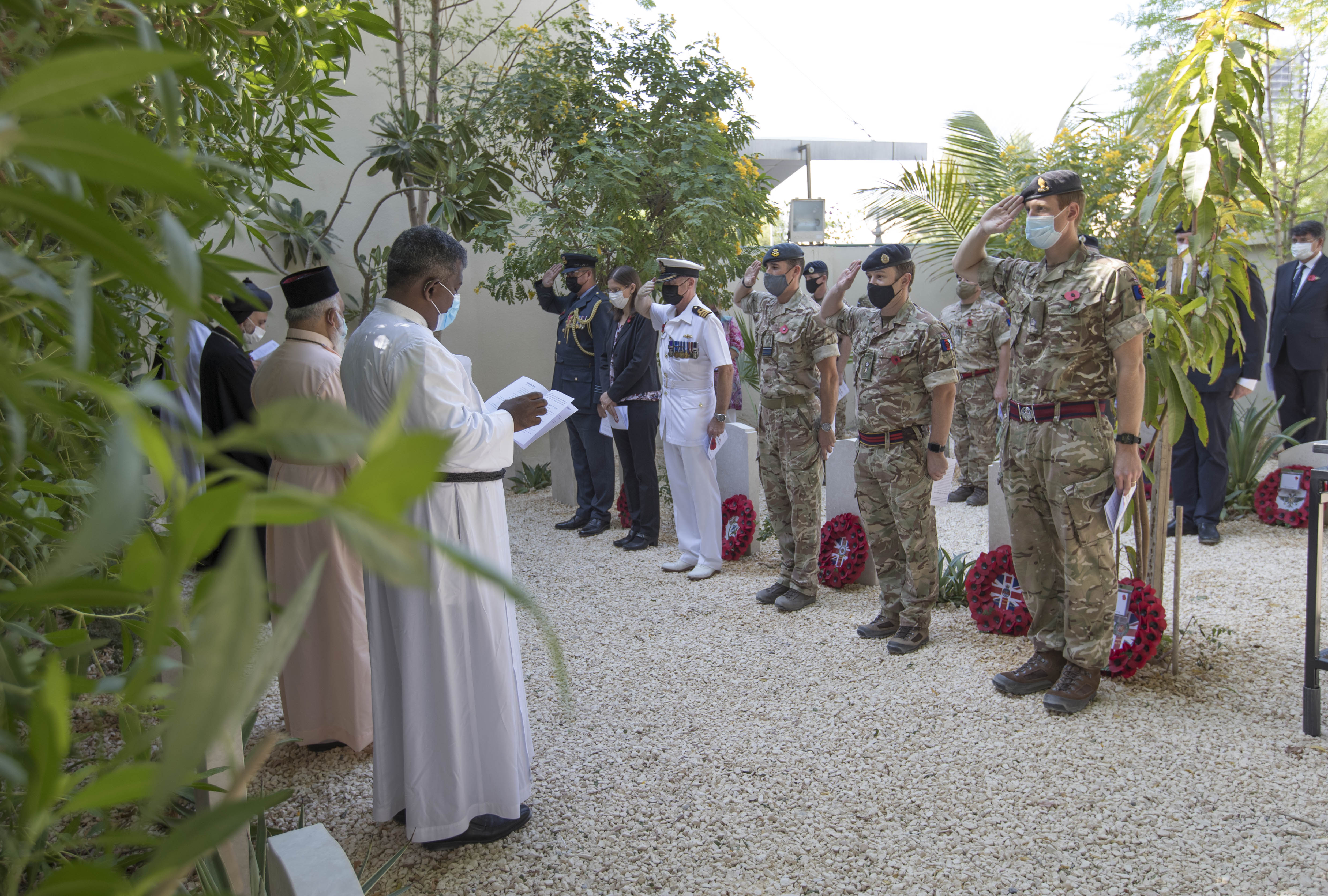
Behind St Martin’s Anglican Church is a smaller, historically distinct cemetery. The Commonwealth War Graves Commission names it Sharjah cemetery and encourages visitors to visit the church after the cemetery gate has been locked.
The cemetery commemorates the Christian community as well as British servicemen who died in Sharjah at the turn of the 20th century.
A remembrance event was held in 2021 after the restoration of the graves of 12 British servicemen killed during the 1960s or 1970s. The project involved replacement headstones as well as improvements to the surrounding cemetery.
The significance of this burial ground is multi-layered:
- This is a Christian memorial.
- This book traces the history of Sharjah’s expatriates in the twentieth century.
- The former British military and aviation presence is the reason for this.
- This video shows the importance of restoring graves that have been neglected.
- This memorial provides families with a place to honor their loved ones.
It is more important to visit the site as a place for reflection than as a tourist attraction.
Christian Burial Arrangements at Al Malha
The St Michael’s Church, Sharjah has published a Christian burial guide that includes another location. Families who have the required documentation can arrange for the burial token at a Sharjah Cemetery located in Al Malha opposite Sharjah Cement Factory.
This distinction is important because “Christian cemetery” in Sharjah does not always refer the older cemetery located behind St Martin’s Church. This term can also be used to describe a burial site that is currently being used for funerals.
Families who are dealing with the death of a loved one should follow instructions provided by:
- Sharjah Police
- Health Authorities
- Sharjah Municipality
- The embassy or consulate of the deceased person
- The church or religious institution of the family
- Authorized funeral service providers
Changes in documentation and procedures may occur. A guide older than the one you are using, a map pin or a post on social media should not be used to replace confirmation by the appropriate authority.
Ancient graveyards in Emirate Sharjah
The history of burials in Sharjah stretches back thousands of years.
Archaeological finds show that people lived, traveled, traded, and buried their dead during prehistoric and preislamic periods. These sites turn the Sharjah Graveyard subject from a simple search for a location into a story that is much more complex.
Mleiha Archaeological Graveyard
Mleiha is a major archaeological site in the emirate. The site is described in tourism information as a large cemetery south of the fort, which contains graves of various shapes, sizes, and historical periods.
The burial landscape can help archaeologists answer questions like:
- Families and communities are organized
- The tombs could be individual or collective
- The evolution of burial practices
- What items were placed with the dead?
- Mleiha’s connection to regional trade
- Social differences in tomb construction
The MleihaArchaeological Center is built around a circular Umm an-Nar tomb. The tomb is dated to around 2300 BCE and measures approximately 13.9 metres in circumference. It was used for about two centuries.
The structure’s long history of use indicates that it served more than just one generation. It was not built for a single individual but as part of a collective burial tradition.
They are not abandoned structures. These ancient tombs are protected archaeological sites. You must not remove any stones, pottery fragments, or other objects from the site, even if they appear small or insignificant.
Jebel al-Buhais Burial Sites
Jebel al Buhais is located in the middle of the Emirate Sharjah. Archaeological digs in the area revealed a large graveyard with burials dating back to the Stone Age. Bronze Age. Iron Age. and Hellenistic periods.
This site is of particular value because it contains a long historical sequence. Researchers can examine the development of burial practices across societies and time periods.
BHS66 is an underground tomb dating from approximately 2000-1300 BCE. The tomb is arranged in a clover shape with four interconnected chambers accessible through a central passage.
Another example is BHS a circular above-ground tomb associated with Umm an-Nar. The tomb measures 9.3 metres across, but some of the central chambers have been damaged.
The different designs of ancient burial practices show that they were not static. Communities altered the way they chose sites, built tombs, and buried their dead.
Archaeologists can study human remains, pottery and ornaments as well as surrounding soil in order to:
- Health and Disease
- Childhood and life expectancy
- Diet and nutrition
- Population Movement
- Trade relations
- Craftsmanship
- Family Structures
- Beliefs about death
Graves are not just records of death. The graves provide information about daily life in ancient Sharjah.
The Cultural Importance Of Sharjah Graveyards
The graveyards in Sharjah have multiple meanings.
On a personal basis, it gives families a place to remember and bury their relatives. On a religious basis, it encourages funeral prayers, burial traditions, and reflections on life and death. On a civic scale, it calls for careful land planning, records keeping, security, and long-term upkeep.
Sharjah’s burial sites also reflect the diversity in the emirate.
Muslim cemeteries are a service to the local and majority religion. Christian cemeteries serve to preserve the memory of expatriate service personnel and residents. Non-Muslims can access cremation services that are regulated. The archaeological tombs are evidence of communities who lived in the UAE region before it was created.
Each tradition has their own beliefs and practices. Visitors should not compare them superficially, or treat unusual burial practices as curious. A grave can have historical significance while still being emotionally sacred.
General Burial Procedures in Sharjah
Before a person can be buried, cremated or repatriated, the UAE requires that all official procedures are completed.
The UAE Government portal lists the steps to be taken for a natural death that occurs in the country. This includes obtaining a burial certificate from the district police. When a death is outside of a hospital or requires an investigation, or involves a non-resident rather than resident, different procedures may be applied.
The Sharjah Police offers a service for bereavement known as Mawasat. This covers death documentation, burial or cremation authorisation and death certificates.
Sharjah Municipality, in coordination with the security authorities, offers a permit-service for non-Muslims who request cremation. The list of requirements includes a police certificate of no objection, a death registration certificate from the relevant consulate, or embassy. Also, the death certificate is required, as well as documents pertaining to the deceased’s passport, and residence.
The exact process will depend on the situation. Families should seek direct advice from institutions rather than relying solely on generic online checklists.
Respectful Etiquette when Visiting a Sharjah Cemetery
The cemetery etiquette is important to protect grieving families, and it also preserves the dignity of a burial ground.
Follow these guidelines:
- Cover your shoulders and knees with modest clothing.
- Silence your mobile phone and keep conversations to a minimum.
- Allow funeral parties enough space and privacy.
- When possible, use designated paths.
- Avoid standing or walking directly on graves.
- Never remove a memorial, stone or marker.
- Please do not take pictures of mourners.
- Do not photograph graves or fresh graves.
- Avoid playing music in the cemetery or using it as a place of leisure.
- Children should be closely supervised.
- Follow the signs and instructions of cemetery staff.
- Only leave flowers or memorial items where it is permitted.
- Before leaving, remove all litter.
Photography requires particular sensitivity. Even if photography isn’t explicitly prohibited, it can still be inappropriate at a funeral or in the presence of grieving family members.
Visitors must stay within the designated areas at archaeological burial sites. Excavation zones can contain fragile materials that are easily damaged by simply walking over them.
Visitor Advice : Practical Tips
Sharjah is a very hot place, so it’s best to visit in the morning or later in the afternoon. Visitors should not arrive solely based on the weather, but rather prioritize their official access arrangements.
Some useful preparations are:
- Before leaving, confirm the cemetery’s exact location.
- Check if the gate is usually open.
- Bring identification with you when you visit for administrative purposes.
- When locating a grave, bring along any burial records you may have.
- Wear shoes that are comfortable and suitable for sand, gravel or mud.
- Bring drinking water with you during the warm weather.
- Visit funerals only if you are attending them.
- Before cleaning or doing any maintenance, ask permission.
- Visit archaeological sites only with a tour guide.
It is not necessary to spend a long time at the cemetery in order to show respect. Spending more time in the cemetery may not be necessary. Instead, quiet prayer, reflection or placing a memorial item approved by the cemetery is appropriate.
Preservation and Cemetery Management
Modern cemetery management is a combination of immediate funeral services and long-term responsibility.
Authorities must:
- Burial Records
- Internal Access Routes
- Perimeter walls, gates and fences
- Funerals are held in safe spaces
- Grave Identification Systems
- Cleaning and waste removal
- Future burial areas
- Protection against inappropriate development
Historic cemeteries need specialized conservation. Documenting worn inscriptions, repairing damaged stones or managing vegetation without disturbing graves are all possible.
The restoration of the Commonwealth-associated graves behind St Martin’s Church demonstrates how religious institutions, diplomatic representatives and heritage organizations can cooperate to recover a neglected burial area while preserving its solemn character.
Even more protection is needed for graveyards. Excavation should be a scientifically controlled process, not treasure hunting. The location of a small item can provide important information about its meaning and age. By removing it, you destroy evidence that can’t be replaced.
Sharjah Graveyard : Common Misconceptions
Online searches often reveal a number of misunderstandings:
- Sharjah graveyard does not always refer to a single location. It can also describe a number of modern and historic sites.
- Some cemeteries restrict access to visitors during funerals and other authorized times.
- Muslim burial sites, Christian graveyards and archaeological sites all have different rules and purposes.
- A mappin does not confirm eligibility for burial. Official authority determines where and how the burial can be conducted.
- Ancient graves are not abandoned sites. These are heritage protected resources.
- Simple graves do not mean they are unimportant. A modest design can reflect religious values, rather than an absence of meaning.
- Graves should only be maintained with the permission of family members or administrators.
Why the Burial Places in Sharjah are Important
The graveyards of Sharjah are quiet repositories of faith, family and history.
Modern cemeteries show how the emirate supports its communities. Christian graveyards document the experiences of former servicemen and expatriate congregations. The tombs at Mleiha, Jebel al-Buhais and Jebel al-Adais show that human communities were organized in the area thousands of years ago.
It is better to understand these places through accurate information than by relying on rumors, superstitions or sensational descriptions.
To begin your search for the Sharjah Graveyard, you should first identify the exact location. Next, confirm the current access to the graveyard and adhere to its administrative rules. This approach is responsible and protects memories of private individuals while also preserving the history shared by the entire emirate.
FAQs
1. Sharjah Graveyard is it a specific cemetery?
Not always. It is often used to describe a cemetery located in Industrial Area 6. However, it can also refer to Al Jubail Cemetery or Christian burial grounds in other parts of the emirate.
2. What is the location of the main Sharjah graveyard?
Public maps often list a cemetery by this name within the Sharjah industrial area 6. Before travelling, visitors should confirm their exact destination.
3. There is a Christian Cemetery in Sharjah.
Yes. Christian burial sites include the cemetery located behind St Martin’s Church, and an active cemetery in Al Malha that is mentioned in church guidelines.
4. Can tourists visit cemeteries at Sharjah?
The cemetery determines the access. Access may be restricted by locked gates, funerals in progress, maintenance or administrative rules.
5. Visitors can take photos?
Photographs should only be taken when allowed. Photographing graves, funerals or mourners without their consent is not acceptable.
6. What should visitors wear when visiting?
It is recommended that modest clothing and sensible footwear be worn. Clothing should cover shoulders and knees, and not draw unnecessary attention.
7. Do you have ancient graveyards at Sharjah?
Yes. At Mleiha and Jebel Al-Buhais, important archaeological tombs and burial grounds have been found.
8. How old is the Mleiha tomb?
The oldest tomb in the Mleiha Archaeological Centre is Umm an-Nar, which dates back to 2300 BCE.
9. Who is responsible for issuing burial permits in Sharjah
Official health and police authorities are involved in the process. The requirements vary depending on where and how the death happened.
10. How can a person locate the grave of a family member?
Contact the cemetery administration and provide the full name of the deceased, the date of death, and any burial documents. The public map application may not have individual grave records.