





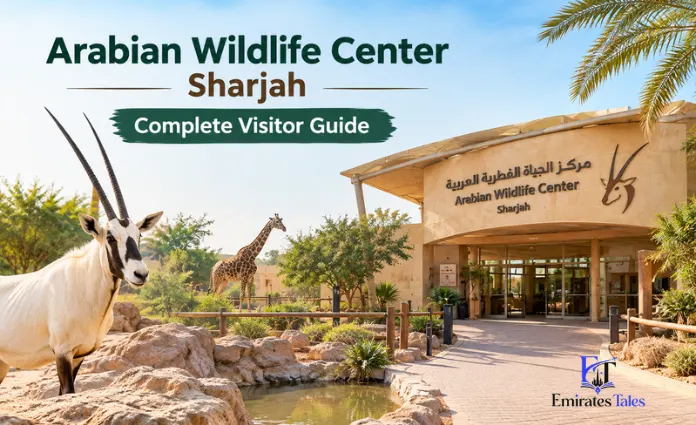

The Arabian Wildlife Center, officially known as Arabia’s Wildlife Centre, is one of Sharjah’s most distinctive attractions for discovering animals native to the Arabian Peninsula. Located inside Sharjah Desert Park, the centre gives visitors an opportunity to observe desert wildlife, learn about endangered species and understand the importance of conservation.
Unlike a conventional zoo displaying animals from around the world, the centre focuses on the wildlife of Arabia. Its exhibits introduce visitors to mammals, reptiles, birds and nocturnal creatures that have adapted to the region’s challenging environment.
Whether you’re planning a family outing, looking for educational activities with children or simply interested in nature, this guide covers the centre’s location, wildlife exhibits, tickets, visiting hours and other useful information.
What Is the Arabian Wildlife Center?
The Arabian Wildlife Center is a wildlife exhibition and educational facility in Sharjah, United Arab Emirates. It opened in 1999 as part of the emirate’s efforts to protect and raise awareness of native wildlife.
According to the Sharjah Commerce and Tourism Development Authority’s 2025 factsheet, the centre showcases more than 100 species, focusing on animals associated with the Arabian Peninsula.
A major feature is its climate-controlled indoor viewing environment, which allows visitors to observe wildlife through specially designed enclosures.
The centre is part of the wider Sharjah Desert Park, a destination that combines wildlife displays, natural history exhibits, botanical education and conservation activities.
Its purpose extends beyond recreation. By introducing visitors to native animals and their habitats, it encourages a better understanding of biodiversity and the environmental challenges facing the Arabian Peninsula.
Where Is the Arabian Wildlife Center Located?
The Arabian Wildlife Center is situated within Sharjah Desert Park, along Al Dhaid Road (E88), approximately 30 kilometres east of Sharjah city.
The park is accessible from Interchange 9 on the Al Dhaid Highway.
Its location outside the central urban area provides a setting for an attraction dedicated to desert environments and regional biodiversity.
How to Get to the Arabian Wildlife Center
Travelling by car or taxi is a practical option for visitors coming from Sharjah or neighbouring emirates.
To find the centre, enter “Arabia’s Wildlife Centre” or “Sharjah Desert Park” into your preferred navigation application.
Visitors travelling from Dubai should plan their route based on their starting location and prevailing traffic conditions.
Direct public transport options should be checked before travelling, as available connections and schedules may change.
If visiting with children or as part of a group, arranging return transportation in advance can make the day more convenient.
Animals You Can See at the Arabian Wildlife Center
The wildlife exhibits are among the main reasons to visit the centre.
Rather than concentrating on exotic animals from distant regions, the centre introduces visitors to species associated with Arabian deserts, mountains and other habitats.
Arabian Oryx
The Arabian oryx is one of the most recognisable animals of the Arabian Peninsula.
Known for its pale coat and long, straight horns, this desert antelope is adapted to surviving in dry environments.
The species has an important conservation history. It disappeared from the wild before being reintroduced through conservation programmes.
Seeing the Arabian oryx provides an opportunity to understand why wildlife protection and managed breeding efforts matter.

Arabian Leopard
The Arabian leopard is one of the region’s rarest large predators.
Smaller than some other leopard subspecies, it is adapted to mountainous and rugged landscapes.
The Arabian Wildlife Center is known for displaying this remarkable animal, helping visitors learn about its behaviour and conservation challenges.
The species faces serious threats in the wild, including habitat loss and declining prey populations.
An encounter with its exhibit can encourage visitors to think about the relationship between predators and healthy ecosystems.
Sand Cats and Other Desert Mammals
Desert wildlife includes much more than large animals.
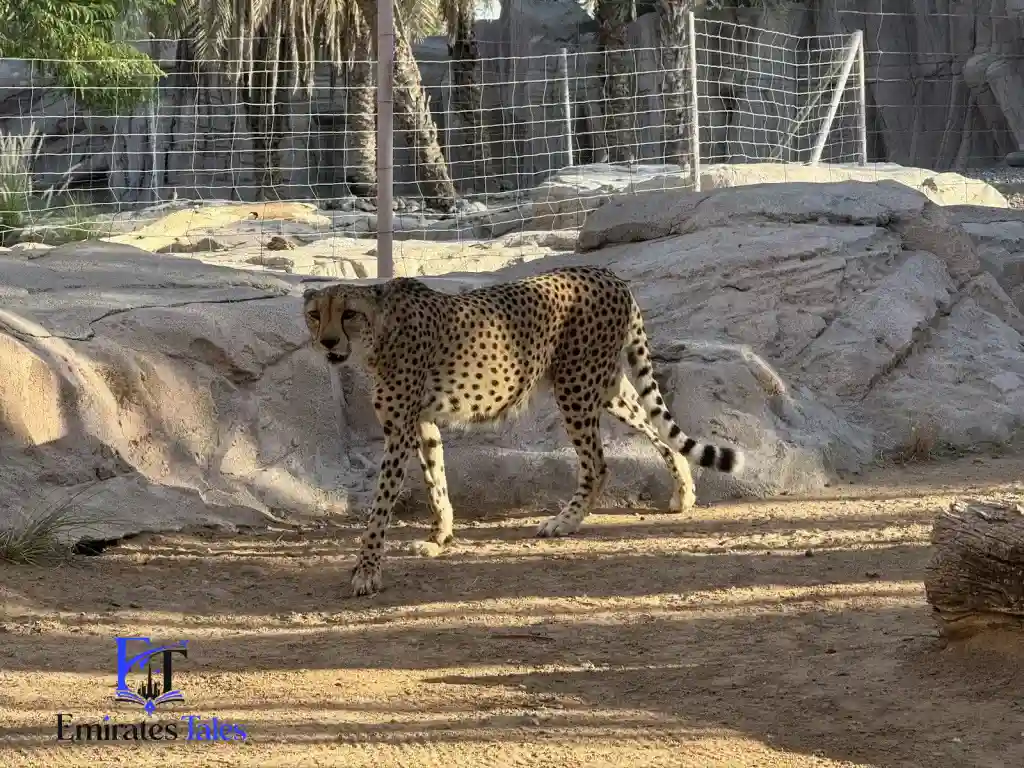
The centre’s exhibits have included small predators such as sand cats, caracals and wildcats.
Sand cats are particularly interesting because of their adaptations to arid environments. Their fur-covered feet and other physical characteristics help them survive in desert conditions.
These animals demonstrate how even relatively small mammals can develop specialised ways of living in demanding habitats.
Reptiles and Insects
Reptiles are an essential part of Arabian ecosystems.
The centre includes displays dedicated to snakes, lizards and other small desert creatures.
Visitors can learn how reptiles regulate their activity, find shelter and survive in environments where daytime temperatures can become extreme.
These exhibits also provide an opportunity to challenge common misconceptions about animals that people may fear or misunderstand.
Birds and Nocturnal Wildlife
The centre features an aviary as well as exhibits associated with nocturnal animals.
The bird displays introduce visitors to species adapted to the peninsula’s varied habitats.
The nocturnal section is particularly educational because it highlights animals that are usually active after sunset.
Visitors can discover how species such as hedgehogs, foxes and small rodents avoid daytime heat and find food during cooler hours.
Actual animal visibility can vary depending on behaviour, enclosure arrangements and operational changes.
What to Expect Inside the Arabian Wildlife Center
One of the centre’s defining characteristics is its indoor wildlife-viewing arrangement.
Visitors can explore different sections while learning about the animals’ habitats, characteristics and ecological roles.
Climate-Controlled Viewing Areas
Many viewing areas are indoors and climate-controlled, making the centre appealing during warmer periods of the year.
Large viewing windows allow visitors to observe animals while remaining separated from their enclosures.
This arrangement can be particularly useful for families with young children who may find prolonged outdoor activities uncomfortable in the UAE’s summer heat.
Educational Displays
Information panels and themed exhibits help explain how native animals survive in their natural environments.
Instead of simply displaying an animal’s name, the educational experience encourages visitors to consider its habitat, diet and role within the ecosystem.
Parents can make a visit more engaging by asking children to identify how different animals are adapted to life in the desert.
For example, children can compare the physical characteristics of a desert fox, sand cat and Arabian oryx.
Arabian Wildlife Center Tickets and Opening Hours
Checking current visitor information is essential before travelling to Sharjah Desert Park.
Published sources have reported different prices and opening schedules, so older figures should not be treated as guaranteed current rates.
Ticket Prices
A 2023 Gulf News visitor guide reported the following admission arrangements:
- Visitors over 12 years: AED 21.50
- Children under 12 years: Free admission
The report stated that the ticket also covered other attractions within Sharjah Desert Park.
However, an older UAE Ministry of Climate Change and Environment listing reports different admission prices.
The current October 2026 ticket price could not be independently confirmed. Visitors should contact the park before travelling rather than relying on historical prices.
Opening Hours
The 2023 Gulf News guide published these visiting hours:
- Weekdays: 9:00 AM–5:30 PM
- Friday: 2:00 PM–5:30 PM
- Saturday and Sunday: 11:00 AM–5:30 PM
- Tuesday: Closed
These are previously published hours, not a verified current schedule.
Opening times may also change during Ramadan, public holidays or special events.
For the latest information, contact the Environment and Protected Areas Authority or consult Sharjah’s official tourism channels.
Other Attractions at Sharjah Desert Park
A visit to the Arabian Wildlife Center can also introduce visitors to other educational attractions within Sharjah Desert Park.
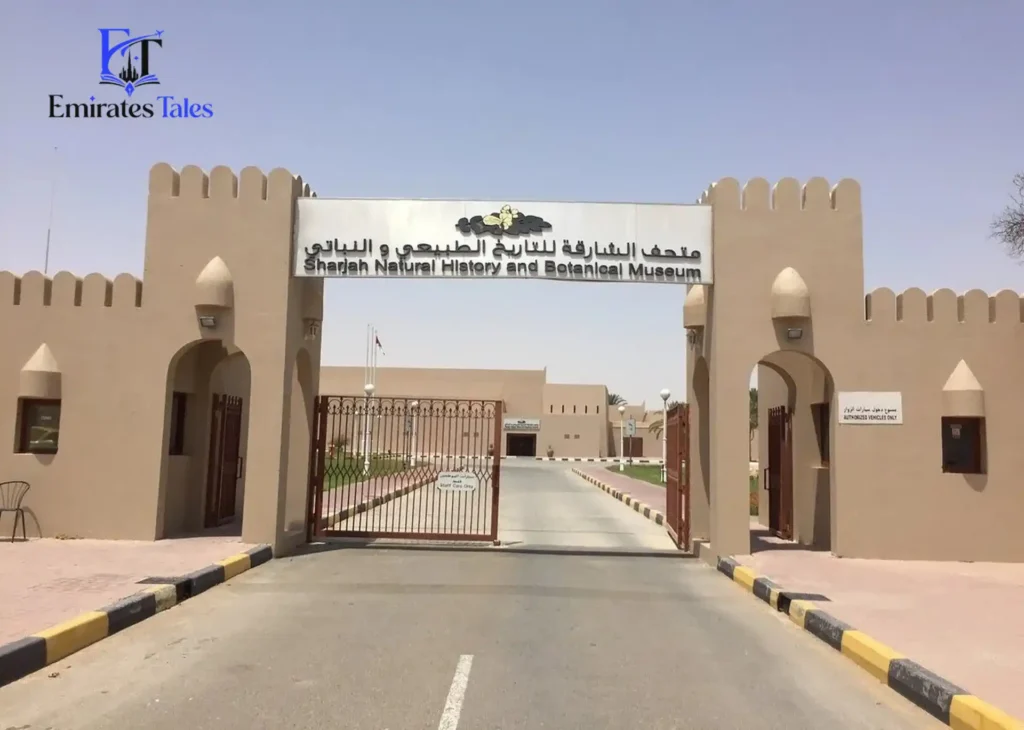
Sharjah Natural History and Botanical Museum
The Natural History and Botanical Museum explores the natural environment, geological history, plants and animals of the region.
Its exhibits provide a broader scientific context for the wildlife visitors encounter at the centre.
This makes it a useful addition for students and families interested in understanding how different habitats develop.
Children’s Farm
The Children’s Farm introduces younger visitors to familiar domestic animals.
Unlike the main wildlife exhibits, the farm offers a more interactive learning environment.
It can be particularly appealing for families with young children who want a combination of educational activities and animal encounters.
Any direct animal interactions should follow the instructions of staff.
Islamic Botanical Garden
The Islamic Botanical Garden introduces plants associated with the Holy Quran and Sunnah.
It combines botanical information with cultural and religious education, offering another perspective on the importance of plants and the natural environment.
Visitors interested in both nature and regional heritage may find this attraction especially worthwhile.
Wildlife Conservation and Environmental Education
The Arabian Wildlife Center contributes to public awareness of wildlife conservation in the UAE.
Its location within Sharjah Desert Park connects it to a wider network of environmental institutions, including the Breeding Centre for Endangered Arabian Wildlife.
This breeding centre supports conservation work involving threatened species but is not ordinarily open to the general public.
The distinction is important: the Arabian Wildlife Center provides public viewing and education, while the separate breeding facility focuses on specialist conservation activities.
By learning about endangered animals, visitors can better understand why habitat protection, scientific research and responsible environmental management matter.
The centre is also useful for schools introducing students to ecosystems, adaptation and biodiversity.
Tips for Visiting the Arabian Wildlife Center
A little planning can help visitors make better use of their time.
- Check opening hours: Confirm the latest schedule, particularly before visiting on holidays or weekends.
- Allow time for other attractions: Sharjah Desert Park contains several educational destinations beyond the wildlife centre.
- Visit at a comfortable pace: Take time to read the information displays rather than rushing between enclosures.
- Bring water: Indoor areas may be climate-controlled, but travel between attractions can involve outdoor exposure.
- Respect the animals: Avoid tapping on viewing windows, making excessive noise or attempting to feed wildlife.
- Check photography rules: Follow posted restrictions, particularly regarding flash photography.
Families may also find it helpful to explain to children before arriving that wild animals do not always remain visible or active.
Conclusion
The Arabian Wildlife Center offers visitors a focused introduction to the animal life of the Arabian Peninsula.
From Arabian oryx and leopards to smaller desert mammals, reptiles and birds, its exhibits show how diverse the region’s wildlife can be.
Its combination of climate-controlled viewing areas, educational information and proximity to other Sharjah Desert Park attractions makes it a useful destination for families, students and nature enthusiasts.
For the best experience, confirm current admission prices and opening hours before visiting and allow enough time to explore the surrounding attractions.
FAQ’s
1. Where is the Arabian Wildlife Center located?
The Arabian Wildlife Center is located inside Sharjah Desert Park on Al Dhaid Road (E88), approximately 30 kilometres east of Sharjah city.
2. What is the Arabian Wildlife Center famous for?
It is known for its collection of Arabian Peninsula wildlife, including rare species such as the Arabian oryx and Arabian leopard.
3. What animals can visitors see?
The centre features Arabian wildlife, including mammals, reptiles and birds. Exhibits have included Arabian oryx, leopards, sand cats, caracals and nocturnal animals.
4. How much is the Arabian Wildlife Center ticket?
A 2023 visitor guide reported AED 21.50 for visitors over 12 and free admission for younger children. Current prices have not been confirmed.
5. Is the Arabian Wildlife Center suitable for children?
Yes. The educational displays and animal exhibits are suitable for family visits, while the nearby Children’s Farm provides additional activities for younger visitors.
6. Is the Arabian Wildlife Center indoors?
Much of the centre’s viewing experience takes place in climate-controlled indoor areas, although Sharjah Desert Park also includes outdoor attractions.
7. What are the Arabian Wildlife Center opening hours?
Historical listings give varying schedules. Visitors should verify current hours with the park before travelling, especially on weekends and public holidays.
8. How far is the Arabian Wildlife Center from Sharjah city?
According to the official Sharjah tourism website, the centre is approximately 30 kilometres east of Sharjah city.
9. Can visitors see endangered animals at the centre?
Yes. The centre is known for displaying rare and threatened Arabian wildlife, including the Arabian leopard.
10. What other attractions are near the Arabian Wildlife Center?
Nearby attractions within Sharjah Desert Park include the Natural History and Botanical Museum, Children’s Farm and Islamic Botanical Garden.